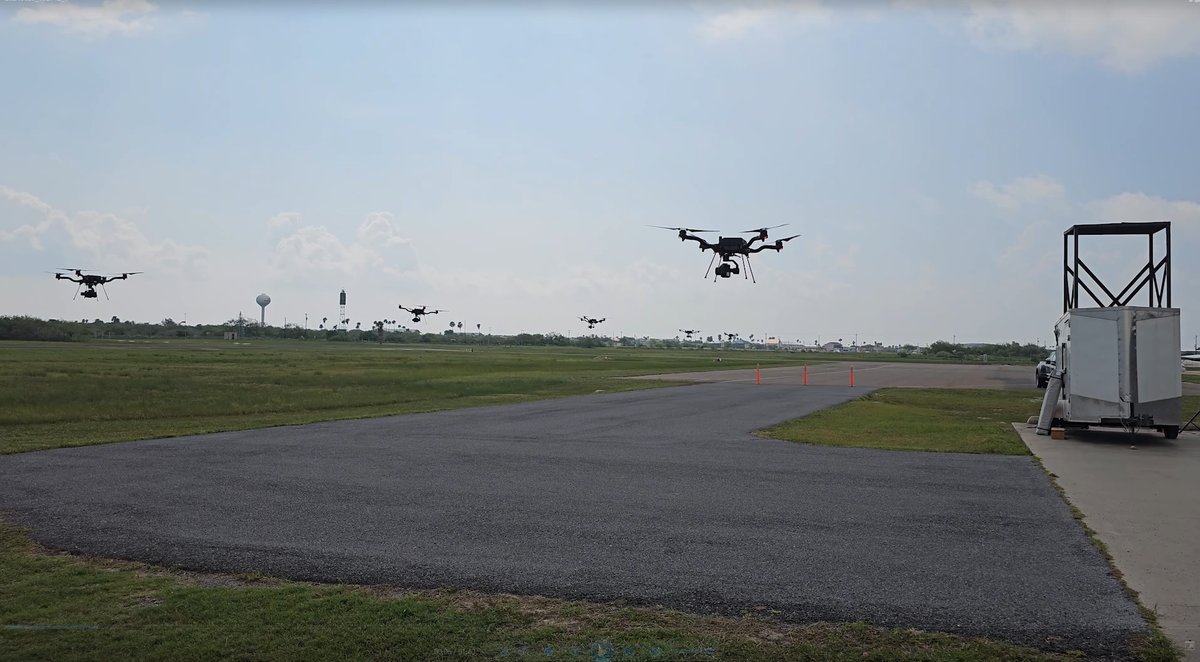
Tempest Droneworx™, a Houston-based developer of autonomous systems software, has introduced Corvus MRDR™ (Modular Robotics Development & Reporting), a platform designed to transform how engineers test and deploy drone algorithms. The announcement, made on August 18, 2026, addresses a critical bottleneck in autonomous development: the high cost and logistical complexity of field testing.
Traditionally, developers must invest heavily in aircraft, flight crews, test ranges, travel, and weather-dependent schedules before they can validate their algorithms. Corvus MRDR eliminates these barriers by enabling engineers to test their code at scale in a simulated environment, then progressively swap simulated vehicles for real ones without altering their existing workflow. This hybrid approach not only accelerates time-to-market but also ensures that developers retain full ownership of their intellectual property (IP).
The platform integrates with Tempest Droneworx's CROS (Common Runtime Operating System) and RAVN (Robotic Autonomous Vehicle Network) technologies, allowing for seamless coordination between virtual and physical drones in real-world coordinates. This means developers can start with purely virtual tests, then gradually introduce physical aircraft as their confidence grows, all within the same operational framework. This incremental strategy reduces risk and cost while maintaining the fidelity of testing.
The implications of Corvus MRDR are significant across multiple sectors. For public safety agencies, faster development of reliable autonomous systems could enhance search-and-rescue operations, disaster response, and surveillance. For commercial entities, it could lower the barrier to entry for drone-based services, such as delivery and infrastructure inspection. In defense and government, the ability to rapidly iterate on algorithms while preserving IP is critical for maintaining technological superiority.
Tempest Droneworx, a Service-Disabled Veteran-Owned Small Business (SDVOSB), emphasizes that the platform is platform-agnostic, meaning it can work with various drone hardware and software stacks. This flexibility is intended to integrate seamlessly into existing developer environments, minimizing disruption.
According to the company, the Corvus MRDR is now available for developers seeking to streamline their testing processes. By reducing the need for extensive field trials, the platform promises to cut development costs significantly, allowing teams to focus on innovation rather than logistics. As autonomous systems become more prevalent, tools like Corvus MRDR will be pivotal in bringing safer and more efficient technologies to market.
For more details on the announcement, including downloadable images and bios, visit the full press release at Tempest Droneworx. The company's platform-agnostic approach, as highlighted in their announcement, positions them to support a wide range of applications, from academic research to commercial operations. With the introduction of Corvus MRDR, Tempest Droneworx is poised to become a key enabler in the next generation of autonomous drone development.