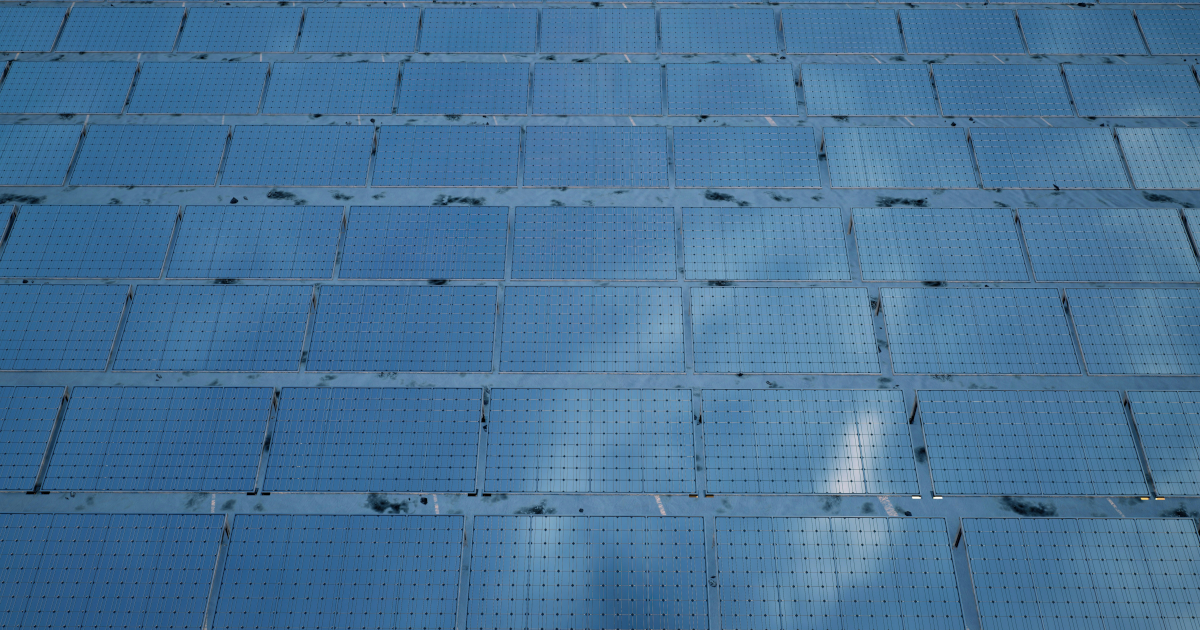
The rapid expansion of solar power across the United States is creating a land-use challenge with no simple answer. Solar requires far more land per unit of output than fossil fuel plants, making the question of where to site new capacity harder to avoid. That tension is showing up at scale as renewable buildout accelerates across the country. A coal plant can power a city from tens of acres; a solar farm generating equivalent output may need hundreds.
How those questions are answered will shape who gains from the transition and who carries the environmental and social costs. That is where firms like American Fusion Inc. (OTC: AMFN) could come in with alternative forms of clean energy in areas where competition for available land makes large-scale solar deployment challenging. The company is exploring fusion technology, which could provide dense, continuous power without the extensive land requirements of solar or wind farms.
The land-use implications of renewable energy are significant. According to a study by the National Renewable Energy Laboratory, utility-scale solar installations require about 5 to 10 acres per megawatt of capacity, whereas a natural gas plant might need less than an acre per megawatt. This disparity means that meeting ambitious renewable energy targets could require converting millions of acres of land, raising concerns about habitat disruption, agricultural displacement, and community opposition.
Already, conflicts over solar farm siting are emerging across the country. In rural areas, farmers worry about losing prime agricultural land, while environmentalists raise alarms about desert ecosystems and wildlife corridors. Urban and suburban areas face their own challenges, with limited available space and higher land costs. These tensions underscore the need for a diversified clean energy portfolio that includes technologies capable of generating electricity with a smaller land footprint.
Fusion energy, if successfully commercialized, could offer a solution. Unlike solar and wind, which are intermittent and diffuse, fusion produces continuous power from a small fuel supply, with minimal land use. Companies like American Fusion Inc. are working to develop compact fusion reactors that could be sited near population centers or industrial facilities, reducing transmission needs and land competition.
However, fusion is not yet commercially viable, and significant technical hurdles remain. In the near term, other approaches—such as agrivoltaics, which combines solar panels with agriculture, or floating solar arrays on reservoirs—could help mitigate land-use conflicts. Policymakers and developers must also engage with local communities early in the planning process to address concerns and find mutually beneficial solutions.
The land-use challenge is a critical issue for the energy transition. As the U.S. races to decarbonize its power sector, the choices made about where and how to build renewable energy infrastructure will have lasting consequences. Companies like American Fusion Inc. represent a potential path forward, but a mix of technologies and careful planning will be essential to balance clean energy goals with land conservation and community needs.