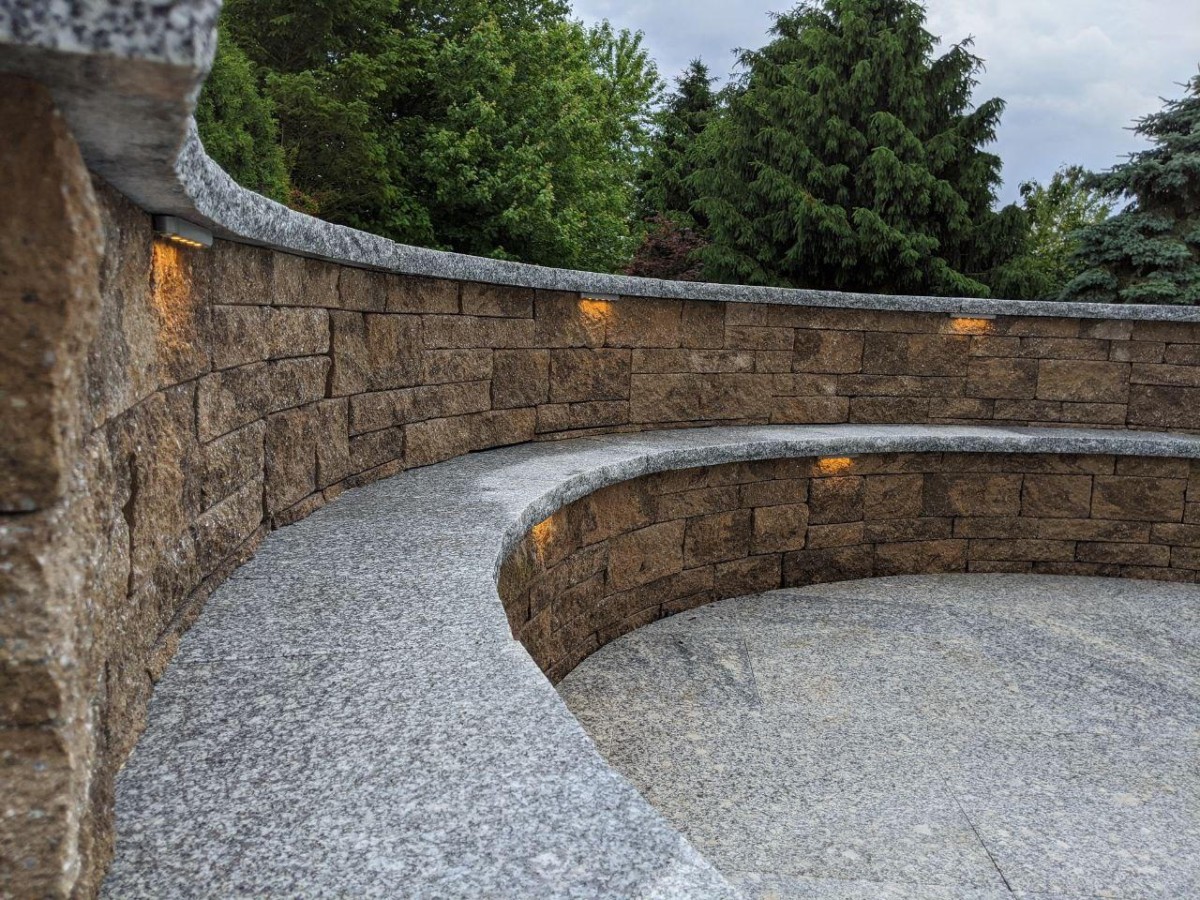
Central Pennsylvania's freeze-thaw cycles are a primary driver of retaining wall demand, as unmanaged slopes face erosion and structural stress from repeated freezing and thawing. A Plus Landscaping, a family-owned design-build company based in Reinholds, has been constructing retaining walls throughout the region since 2006, addressing both the structural challenges and design opportunities that sloped landscapes present.
On unretained slopes, rainfall moves soil downhill, and freeze-thaw events accelerate this erosion, leading to rutted ground, exposed root systems, and depleted topsoil. A properly constructed retaining wall holds soil in place, preventing further degradation. "Many homeowners treat a slope as a permanent limitation to their property, but a properly engineered retaining wall completely changes how a yard functions," said Marcus Waldner, Founder of A Plus Landscaping. "In Central Pennsylvania, our severe freeze-thaw cycles put immense physical pressure on unmanaged soil. We don't just build walls as standalone fixes; we integrate built-in drainage systems to protect the landscape structure while transforming unusable slopes into flat, functional ground built to last for decades."
The wall functions as a physical barrier, redistributing the weight of the slope and keeping the soil profile stable across changing seasons. For Central PA properties, where frost depth and precipitation place consistent pressure on unmanaged grades, that structural function is a practical necessity rather than an optional upgrade.
Retaining walls that lack adequate drainage introduce serious structural vulnerabilities. Water accumulates hydrostatic pressure behind the wall face, which can cause displacement or complete structural failure over time. The drainage system installed behind and beneath the wall units is as important as the visible hardscape material itself. Thorough planning ensures that each retaining wall layout incorporates the necessary drainage components from the start, including specialized base materials, clean drainage aggregate positioned behind the wall blocks, and a precise grading plan designed to direct water away from both the wall structure and the home's foundation.
Landscape retaining walls produce flat, stable ground—a structural outcome that an open slope cannot provide. That level surface makes a patio installation viable, gives custom planting beds a stable foundation, and establishes defined tiers across a property that can each serve a distinct purpose. In Central PA, where properties frequently feature pronounced natural elevation changes, retaining wall installation is often the foundational project that makes subsequent outdoor renovations possible. The design team approaches these structures as part of a connected outdoor environment rather than an isolated solution, ensuring the completed hardscape integrates cleanly with custom patios, paver steps, and softscape layouts.