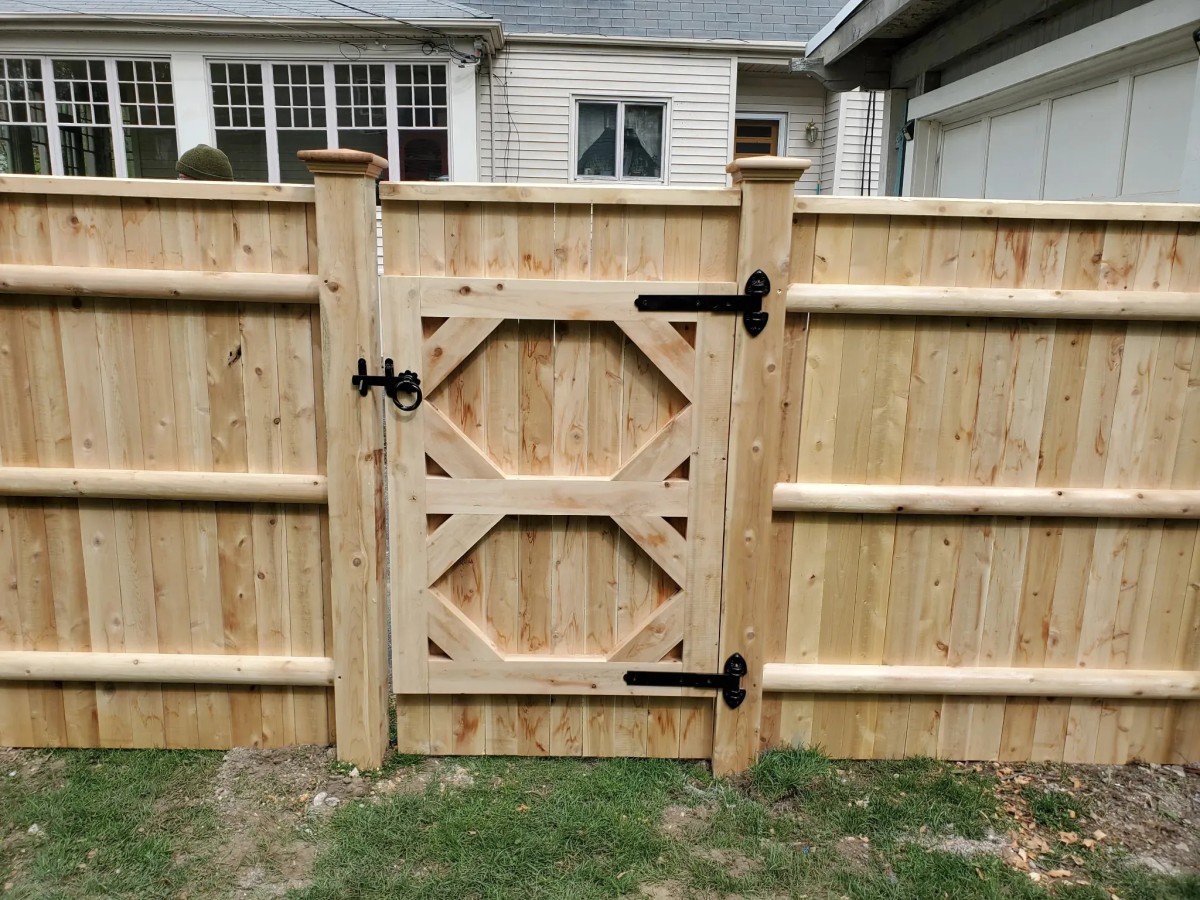
Privacy fence requests are climbing across Newburyport this summer, and Olympic Fence Co is booking installs earlier than in past years. The family-owned company, based in nearby West Newbury and serving the North Shore since 1985, says vinyl, cedar, and semi-private styles are leading the demand as more homeowners build out backyards, pool decks, and outdoor entertaining space.
Salt air decides which materials actually last. Newburyport sits right off the Atlantic, and the salt in the air is hard on fencing that was not chosen with the coast in mind. Homes near Plum Island, Joppa, and the Merrimack River get the most exposure, but salt carries well inland on a steady sea breeze. Untreated metal hardware corrodes. Some finishes chalk and fade faster than they would a few towns west. This is the first reason local homeowners tend to ask for vinyl and cedar by name. Both handle coastal conditions well when they are installed with the right hardware. Stainless or hot-dipped galvanized fasteners and quality gate hardware are what keep a coastal fence working years after the panels go up.
Vinyl privacy fencing is the low-maintenance pick. Vinyl is the most requested privacy option in Newburyport for a reason. It resists moisture, will not rot, and holds its color without repainting or staining. A rinse with a garden hose usually handles the salt film and pollen that build up over a season. Quality varies more than most people expect. Wall thickness, reinforced bottom rails, and the way panels lock into the posts separate a fence that stays straight from one that bows in the summer heat. Darker colors and woodgrain textures have improved a lot, so vinyl no longer means a plain white wall.
Cedar brings a natural look with built-in resistance. Cedar is the choice for homeowners who want real wood grain and the warmth that comes with it. The wood carries natural oils that help it shrug off insects and decay. Left alone, cedar weathers to a soft silver-gray. Sealed every couple of years, it holds a warmer tone. Cedar does ask for more attention than vinyl over its life. A coat of stain or sealant every two to three years protects the wood and keeps the color you want.
Semi-private styles handle coastal wind better. Not every yard needs a solid wall. Semi-private styles use spaced boards, a board-on-board layout, or a lattice top to give screening while still letting air move through. On an exposed coastal lot, that airflow matters. A solid fence acts like a sail in a strong Nor'easter, and it puts real load on the posts and panels. A semi-private design cuts that wind pressure and still blocks most sightlines from neighbors.
Posts have to be set below the New England frost line. This is the part homeowners never see, and it is the part that makes or breaks a fence here. New England winters push frost several feet into the ground, and when moisture in the soil freezes and expands, it lifts anything that is not set deep enough. Setting posts below the frost line, in properly sized holes with the right base, is what keeps a fence plumb for the long run. Newburyport soil also varies from sandy near the coast to heavier and wetter in low-lying spots, and that changes how a post should be set.
Pool decks come with barrier and gate rules. Massachusetts follows pool barrier codes that generally call for a minimum barrier height, gaps small enough to keep a child out, and gates that are self-closing and self-latching. The exact requirements are enforced locally, so a Newburyport pool project should be confirmed against the current rules before the design is finalized. A privacy fence around a pool deck can do double duty, screening the space from neighbors while meeting the barrier requirement, but only if the height, gaps, and gate hardware are planned that way from the start.
Property lines and setbacks come before the first post. Before a project starts, it pays to know exactly where your property ends. On tight urban lots in the South End or older parts of downtown Newburyport, a few inches can matter, and a fence built over the line can mean tearing it out later. Many towns also apply setback rules that keep a fence a certain distance off the sidewalk or road, and corner lots often have sight-line rules so a fence does not block a driver's view.
Newburyport permitting and historic district review. Fence permitting is handled at the local level, and Newburyport is stricter than some of its neighbors. Many fence projects need a permit, and height limits often differ between front and back yards. Newburyport also has local historic districts, and properties inside them can face additional review over fence style, height, and materials. An installer familiar with Newburyport can point you toward the right department and help you choose a design that is likely to be approved.
Call Dig Safe before anyone digs. Any fence install means digging post holes, and in Massachusetts the law requires marking out underground utilities first. Homeowners and contractors call Dig Safe at 811 before the work starts, and the utilities send crews to mark gas, electric, water, and communication lines in the dig area. A professional crew builds this step into the schedule as a matter of course.
Summer is peak season, so timing matters. Fence calendars fill up fast once the weather turns, and this summer is no exception. Homeowners who wait until they need the fence done often find the earliest slots are already taken. Booking an estimate early is the surest way to lock in a preferred install window before the season books out. Starting the conversation early leaves room to do it once and do it right.
Olympic Fence Co has worked across the North Shore since 1985 and is a member of the American Fence Association. The team installs vinyl, cedar, semi-private, and pool-code fencing for homes throughout Newburyport, West Newbury, and the surrounding communities. Homeowners can visit Olympic Fence Co for more information or to schedule a free on-site consultation.